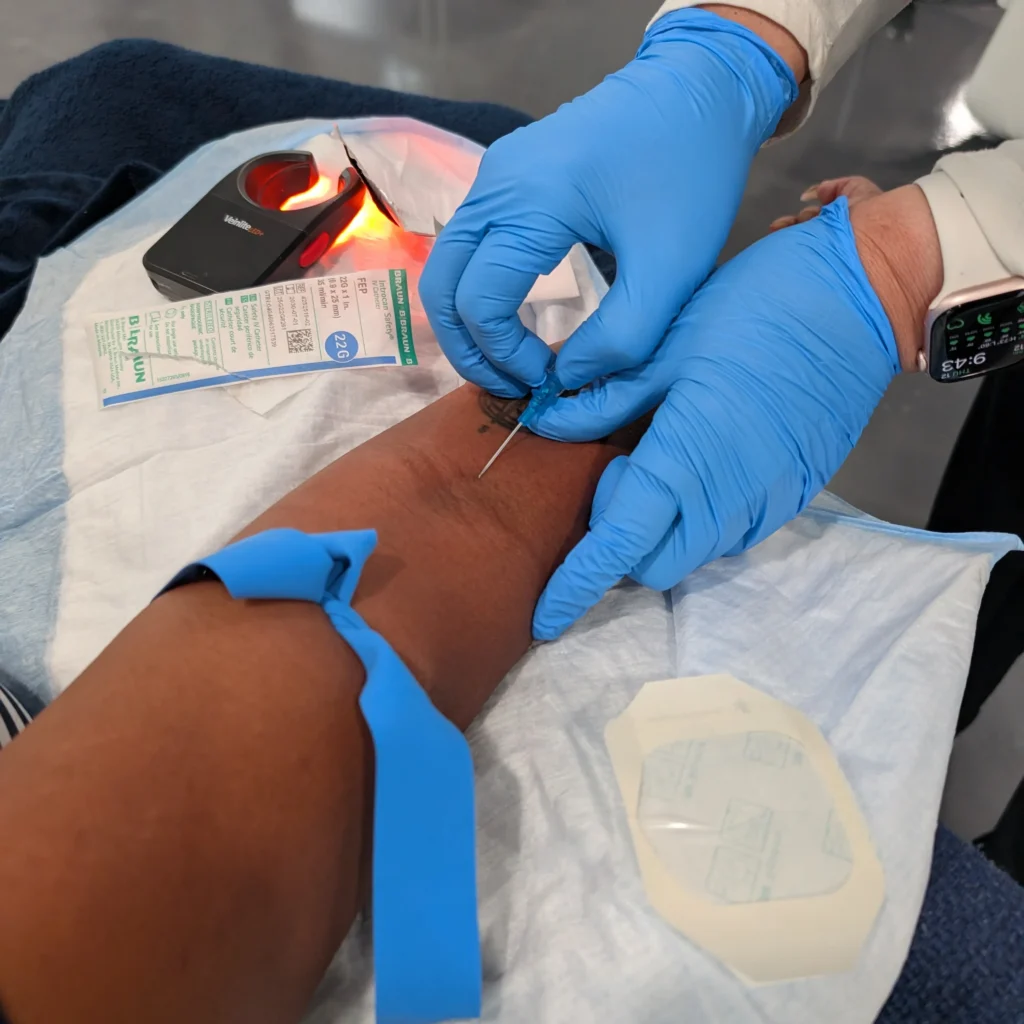
Procaine IV therapy benefits go far beyond what most people expect. Most people know Procaine as the numbing agent from the dentist’s chair. Novocain. Something you were given before a procedure and forgot about an hour later.
What most people do not know is that researchers have been studying Procaine’s effects far beyond anesthesia for over a century. And a 2021 peer-reviewed paper published in Oxidative Medicine and Cellular Longevity, one of the leading journals in aging and longevity research, has now systematically documented what makes Procaine one of the most pharmacologically interesting molecules in medicine.
If you have been curious about Procaine IV therapy at The Remedy Room, this is the science behind the procaine IV therapy benefits our patients experience.
The Research Behind Procaine IV Therapy Benefits: 30 Years of Evidence
The paper, titled Procaine: The Controversial Geroprotector Candidate: New Insights Regarding Its Molecular and Cellular Effects, was authored by researchers from Carol Davila University of Medicine and Pharmacy in Romania and the University of Konstanz in Germany. It was published in July 2021 and is freely available through PubMed Central.
The researchers reviewed 30 years of scientific literature on Procaine’s biological and pharmacological effects, documenting both the positive findings and the areas of ongoing debate. Their goal was to build a comprehensive picture of what Procaine actually does at the molecular and cellular level, beyond its well-established role as a local anesthetic.
What they found is significantly more interesting than most people expect, and it explains why procaine IV therapy benefits extend well beyond simple pain relief.
What Procaine IV Therapy Actually Does at the Cellular Level
The paper documents Procaine’s effects across multiple biological systems and experimental models. Here is what the research shows.
Antioxidant Protection
Procaine reduces oxidative stress at the cellular level. Oxidative stress is the process that drives chronic inflammation, accelerates aging, and contributes to the development of cardiovascular disease, neurodegeneration, and cancer. The research documents Procaine’s antioxidant effects in experimental models of myocardial ischemia, lipoprotein oxidation, and toxic stress, showing meaningful protective effects on cell function and survival.
Anti-Inflammatory Effects
Procaine inhibits key inflammatory pathways in ways that go well beyond its anesthetic mechanism. The paper documents beneficial effects in models of inflammation and sepsis, suggesting that Procaine’s anti-inflammatory properties operate through multiple pathways simultaneously rather than a single targeted mechanism.
Cardiovascular Protection
The research documents Procaine’s effects on lipoprotein oxidation and endothelial-dependent vasorelaxation, two critical factors in cardiovascular health. Oxidized lipoproteins are a primary driver of arterial plaque formation. Endothelial function governs blood vessel flexibility and circulation. Both are central to long-term cardiovascular health and both were positively influenced by Procaine in the reviewed studies.
Neuroprotection and Brain Health
One of the most significant sections of the paper covers Procaine’s effects on cerebral age-related pathology and neurodegeneration. The research documents cytoprotective effects in the nervous system, suggesting a role for Procaine in supporting brain health as we age. This aligns with decades of clinical observation from European physicians who noted cognitive and neurological improvements in patients receiving Procaine-based therapies.
DNA Methylation Regulation
This is perhaps the most scientifically significant finding in the paper. Procaine has documented effects on DNA methylation, one of the primary mechanisms through which aging is expressed at the cellular level. DNA methylation patterns change as we age and are directly associated with the development of age-related diseases. The fact that Procaine influences these patterns places it in a category of compounds with genuine anti-aging biological activity, not just symptom management.
Cancer-Related Effects
The paper also documents Procaine’s effects in experimental cancer models, noting cytoprotective actions that are relevant to cancer prevention and treatment support. This connects directly to the broader integrative oncology work at The Remedy Room, where Procaine IV therapy sits alongside High-Dose IV Vitamin C, EBOO therapy, and NAD+ therapy as part of a comprehensive supportive protocol.
A Brief History: Why Procaine Was Always More Than an Anesthetic
Procaine was first synthesized in 1905 by Alfred Einhorn and introduced into clinical practice as Novocain. Within decades, researchers across Europe had independently begun documenting its effects beyond anesthesia.
By the 1950s, physicians in Russia, Germany, France, and Romania were all exploring Procaine’s broader therapeutic properties. The most notable figure from this era was Ana Aslan, a Romanian physician who developed Gerovital H3, a Procaine-based formulation, after documenting what she described as beneficial effects on cellular function and metabolism following long-term low-dose treatment. Her work attracted significant international attention and Procaine became one of the most discussed compounds in anti-aging medicine during the 1960s and 70s.
The research never stopped. The 2021 paper synthesizes three decades of modern molecular and cellular research into a coherent picture of how and why Procaine produces these effects, bringing rigorous contemporary science to what was previously a field dominated by clinical observation and anecdote.
The Geroprotector Concept: What It Means
The paper proposes Procaine as a candidate for the Geroprotectors database, a curated scientific index of compounds shown to target fundamental mechanisms of aging that are common to multiple age-related diseases.
To qualify as a geroprotector candidate, a compound must demonstrate the ability to increase healthy lifespan, improve molecular and cellular biomarkers toward a younger state, work at doses well below toxic levels, and improve the patient’s quality of life across physical, mental, emotional, and social dimensions.
The researchers conclude that Procaine meets most of these criteria and that it represents a molecule that has not yet fully expressed its therapeutic potential in the treatment and prevention of aging-associated diseases.
Procaine displayed antioxidant and cytoprotective actions in experimental models of myocardial ischemia, lipoprotein oxidation, inflammation, sepsis, cancer, and neurodegeneration. This analysis painted a complex pharmacological profile of procaine: a molecule that has not yet fully expressed its therapeutic potential in the treatment and prevention of aging-associated diseases.
Gradinaru D, et al. Oxid Med Cell Longev. 2021.
What This Means in a Clinical Context
At The Remedy Room, Procaine IV therapy is used for patients dealing with chronic pain, nervous system dysfunction, and persistent symptoms that have not responded to conventional treatment. The pain relief and nervous system reset effects are well documented and are what most patients come for.
What this research adds is a broader biological context. The antioxidant, anti-inflammatory, cardiovascular, and neuroprotective effects documented in the paper suggest that Procaine IV therapy may offer benefits that extend beyond acute symptom management and into the territory of long-term cellular health and disease prevention.
This does not change how we approach the therapy clinically. Every patient who comes to The Remedy Room for Procaine IV begins with a consultation to determine whether the therapy is appropriate for their specific situation. What it does is deepen the scientific rationale for a therapy that has been used safely and effectively for over a century.
Is Procaine IV Therapy Right for You?
Procaine IV therapy tends to be most appropriate for patients dealing with chronic pain that has not responded to conventional treatment, post-surgical discomfort, nerve pain, fibromyalgia, and nervous system dysregulation. It is also increasingly relevant for patients interested in the anti-aging and longevity dimensions documented in the research.
A consultation at The Remedy Room is where everything starts. Our physician-led team reviews your health history, your current symptoms, and your goals, and gives you an honest assessment of whether Procaine IV therapy is right for your situation.
Consultations start at $69. Treatment packages are available following your assessment.
Learn More About Procaine IV Therapy at The Remedy Room
theremedyroom.com | 504-301-1670 | 123 Metairie Rd., Old Metairie, LA 70005
Research reference: Gradinaru D, Ungurianu A, Margina D, Moreno-Villanueva M, Burkle A. Procaine: The Controversial Geroprotector Candidate: New Insights Regarding Its Molecular and Cellular Effects. Oxid Med Cell Longev. 2021;2021:3617042. Available at: pmc.ncbi.nlm.nih.gov/articles/PMC8349289